Walk into an emergency treatment classroom in Miranda right before 9 am and you'll really feel the exact same mix of nerves and purpose every single time. A child care worker sits near a tradie with a bandaged thumb. Two retired people contrast notes regarding their grandkids' allergic reactions. A fitness train checks the begin time of their following class. By late mid-day, the group will certainly have practiced compressions hard sufficient to break a sweat, rolled schoolmates right into recovery placements, and questioned whether to call three-way zero now or after a couple of fast checks. A one-day program does not transform anyone into a paramedic, however it provides regular individuals the self-confidence to act in the minutes that count.
This is what a day of emergency treatment training in Miranda typically looks like, what you really learn, and how to select the appropriate local first aid course training course for your needs.
The speed and rhythm of a one-day course
Most providers in the Shire run combined distribution. You complete self-paced concept online, usually two to 6 hours depending upon the device, after that attend an in-person practical session that runs 3 to six hours. Suppliers such as Emergency Treatment Pro Miranda and various other local trainers typically offer morning, afternoon, or weekend options, and some compress the whole experience into one intensive day. The face-to-face session concentrates on what can not be gained from a display: hands-on skills, voice commands, spatial awareness, and human judgment under pressure.
The fitness instructors I respect take care of power like good coaches. They press hard throughout mouth-to-mouth resuscitation blocks, after that change to situation job that seems like a puzzle. You will relocate, stoop, stand, and swap roles typically. The objective is not rote memory, it is pattern acknowledgment: check out the scene, act emphatically, after that reassess. People frequently arrive worried concerning "getting it wrong." By lunchtime they are dealing with each other's hand placement and speaking up throughout debriefs.
What you in fact practice when the clock starts
A normal Miranda emergency treatment program opens up with the DRSABCD primary survey. It seems basic when typed out, however the art hinges on the cadence and tone of the rescuer.
Danger: You check and verbalise. Electric devices off. Web traffic quit. Spectators back. If the occurrence is in an office, you confirm any type of site-specific risks, like chemicals or live equipment.
Response: You kneel to the casualty's eye level. You present on your own, touch the shoulders, talk in clear, short expressions. If no reaction, you elevate your voice and enlist help.
Send for assistance: You indicate a bystander and designate a task, not a tip. "You in heaven shirt, telephone call triple zero currently. Tell them a grownup is unresponsive at [location] Place the call on audio speaker."
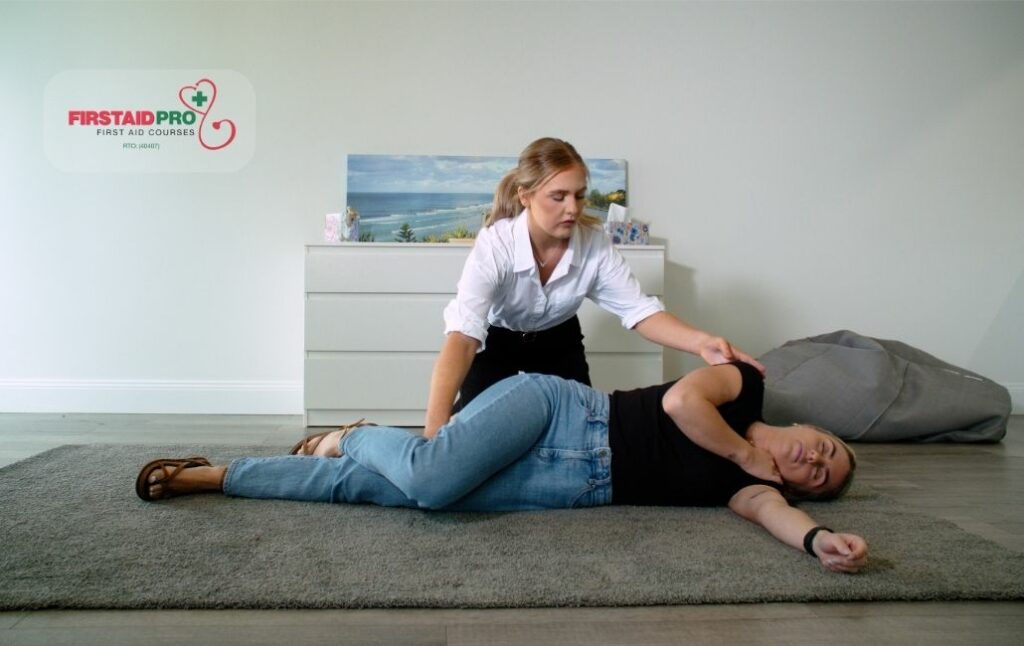
Airway: You open up the mouth, try to find visible blockages, and, if essential, roll the patient into a lateral setting to clear liquids or vomit. Trainers demonstrate simple, safe approaches to scoop noticeable debris with 2 fingers, absolutely nothing blind or forceful.
Breathing: You look, listen, and feel. 10 secs, say goodbye to. You are educated to trust your senses, not presume. If unsure, you deal with as not breathing.
CPR: You begin compressions at 100 to 120 per minute, roughly a third of the chest deepness in grownups. Count out loud if it aids keep pace. The course practices on grown-up, child, and infant manikins. Excellent instructors will certainly make you change duties to test stamina and quality.
Defibrillation: You deploy an AED as soon as it arrives. The maker trainers you, yet you exercise the choreography: subject the chest, peel off and stick pads as shown, clear the patient for analysis and shock, after that return to compressions immediately.
Throughout the session, the instructor layers in sensible information you will not forget. Exactly how to shave a chest promptly if the pads won't stick. Just how to completely dry perspiring skin so the adhesive does not slide. Where to position pads on an infant. Why compressions on a bed are ineffective unless you pull the client to the floor or put a hard board underneath them.

CPR in Miranda: the information that matter
People sign up for a CPR training course in Miranda since they intend to really feel qualified if the most awful takes place. The truth is that mouth-to-mouth resuscitation is requiring, yet technique and synergy save power. Courses commonly combine participants so they can rotate every two mins, mirroring ideal practice to maintain compressions deep and regular. You learn to utilize a metronome app or the AED's beeps to keep pace, and you practice giving 2 rescue breaths with a face guard or obstacle tool if your unit of competency calls for it.
Compression-only CPR is reviewed truthfully. If you are untrained, unwilling, or not able to give breaths, compressions alone are far much better than not doing anything. If you do offer breaths, the instructor will certainly show you just how to turn the head, raise the chin, and provide each breath over one second, sufficient to see the chest surge. No one leaves the area without having felt what a great seal and a reliable breath really feel like.
AEDs are more typical throughout Miranda than many individuals become aware. Shopping center, health clubs, council facilities, and schools frequently have them, and you are motivated to try to find the heart-and-bolt sign whenever you go into a new building. Throughout circumstances, a person will unavoidably be reluctant to use the pads to a woman for discreetness factors. The instructor addresses it directly: preserve self-respect as ideal you can, however do not delay. Time without oxygen wounds the mind at a ruthless rate.
The peaceful confidence of wound care
Not every emergency involves mouth-to-mouth resuscitation. Much of an emergency treatment and mouth-to-mouth resuscitation course in Miranda is about the bread-and-butter injuries that load a workday or weekend break. Bleeding control is shown with objective. Direct pressure beats expensive technique the majority of the moment, and you practice developing pressure dressings with whatever you have on hand. Tourniquets are presented for life-threatening arm or leg bleeding, made use of high and tight, with clear time recording. Some suppliers supply training tourniquets so you can feel the distinction between appropriate and insufficient tension. You discover to date and time a clothing, not for bureaucracy, yet so the following medical professional knows for how long tissue has actually been ischemic.

Burn administration is short, however memorable. Cool running water for 20 minutes, not ice, not ointments. Trainers frequently maintain a timer on the wall surface to educate classes for first aid near me what 20 mins actually seems like when an individual is squirming or the moms and dad is troubled. Cling wrap is made use of to cover a melt loosely after cooling, not as a tight bandage. You are advised to consider body area and place: burns to hands, face, genitals, or across joints get clinical testimonial even if small.
Fractures and strains obtain standard immobilisation. The fitness instructor will certainly ask for whatever headscarfs, jackets, or towels the group has and show how to improvise a sling that keeps a lower arm in mind level. The point is not to construct a best triangle from a book, it is to stop activity, reduce discomfort, and protect flow and nerve feature up until help arrives.
Breathing troubles, asthma, and anaphylaxis
If you live or operate in the Shire, you will eventually satisfy someone with a flatterer or an EpiPen. The program makes these gadgets regular. For asthma, you exercise the four-breath cycle: 4 smokes by means of spacer, one breath per puff, wait 4 minutes, and repeat as needed. Instructors bring spacers and demo inhalers so you can set up, tremble, and instructor an aware patient via a panic-inducing attack.
Anaphylaxis training is useful. You recognize early indications such as hives, swelling, or tummy pain, after that severe indicators like breathing trouble, throat swelling, or collapse. You practice with training autoinjectors on your own upper leg over apparel. The guideline is straightforward: if in doubt, provide adrenaline. It buys time by reversing airway swelling and supporting blood pressure. People often bother with providing it "prematurely." Trainers show the safety and security margin and the factor we do not wait to see if signs escalate.
The moments that hinge on judgment: head injuries, seizures, and strokes
Miranda first aid programs pierce pattern recognition for time-sensitive conditions. A fall at a netball court followed by confusion and frustration motivates you to think trauma. You manage remainder, screen for red flags, and avoid offering pain medication that might mask worsening signs and symptoms. A seizure on a train platform requires room around the person, defense of the head, and a calm count of the period. After convulsions, you roll to a healing position and inspect breathing. You do not compel items into the mouth. Fitness instructors frequently share neighborhood narratives because seeing the scenario in your mind helps you act quickly later.
Stroke acknowledgment is a staple. You exercise the FAST check: face droop, arm weak point, speech difficulties, time to call emergency situation solutions. The fitness instructor will certainly push you to call early instead of wait. If you are the one hesitating, your colleague must be able to take the phone and maintain you doing what you are best placed to do on scene.
Making sense of shock and the subtle signs of deterioration
Shock is not a basic synonym for scare. It is a dangerous failing of flow. You learn to spot cool clammy skin, rapid breathing, weak pulse, anxiety that suggestions right into complication. The fix is placing, warmth, control of blood loss, and fast handover to paramedics. One of one of the most useful exercises in a Miranda emergency treatment program is the serial check: you reassess every few mins, aloud, and you document changes. A casualty who can hold a conversation at 10 mins however slurs at 22 mins informs you the trajectory is downward, despite a single set of "normal" vitals.
The Miranda specifics: place, response, and AED access
Training that really feels local has a tendency to stick. In courses around Miranda, trainers reference real sites. If an occurrence occurs near Westfield or the terminal, you plan for crowded environments and safety team who can aid. At exterior sports fields like Seymour Shaw, you think about car accessibility for rescues and just how to organize bystanders securely. If you operate in a strata building, you locate the closest AED now, not throughout a situation. Some carriers urge individuals to add AED locations to mapping apps or work environment maps after the course.
When the phone comes out to dial three-way zero, you are taught to offer the precise address, any type of access codes, and a callback number. You maintain the phone on speaker so the phone call taker can lead you with compressions or various other directions. I have actually watched individuals freeze due to the fact that they tried to do whatever alone. Delegation belongs to first aid. Hand the phone to someone with a steady voice. Send out an additional individual to satisfy paramedics at the street and guide them in.
What counts as a "training course" and exactly how to select one
The residential jargon can be opaque. Most students trying to find a first aid program in Miranda desire one of three points:
- An incorporated first aid and mouth-to-mouth resuscitation course for the basic workplace, child care, physical fitness, hospitality, or neighborhood roles. This shows the wide collection of first aid feedbacks plus mouth-to-mouth resuscitation and AED use, and typically consists of on the internet concept ahead of a practical workshop. A standalone mouth-to-mouth resuscitation program in Miranda focused on compressions, breaths, and AED use. Perfect for annual refreshers if your office needs you to maintain mouth-to-mouth resuscitation current each year. A CPR refresher course in Miranda that recognises prior discovering and concentrates on showing competency once again. The sensible part is shorter, due to the fact that you bring skills from previous training.
Look at the delivery format. Numerous providers in Miranda emergency treatment training use pre-course eLearning to cover legal duties, infection control, permission, and documents. The in-person time is after that concentrated on hands-on practice. If you have restricted time, combined programs are reliable. If you choose instructor-led concept, select a service provider that offers a full face-to-face day. Testimonials matter. You desire instructors that deal with technique without awkward people and that develop circumstances that feel practical to your industry.
Certification, currency, and what "experienced" means
Successful participants gain an emergency treatment certificate in Miranda that details the units of expertise attained. The notepad confirms evaluation, however the actual worth is in fresh muscle mass memory. Market norms in Australia suggest upgrading CPR every year and complete first aid every three years, or more often if your office requires it. Skills degeneration fast. The very first indication is hesitation. The second is superficial compressions. Routine technique repairs both.
If you are restoring, ask whether your cpr training in Miranda consists of responses manikins. Several classrooms currently make use of manikins that determine depth and price, which develop your technique in mins. The trainer will certainly often reveal your compression chart on a tablet. Seeing a flat-top waveform at the appropriate rate is motivating, and it makes you readjust your approach until each push is consistent.
Legal and honest guardrails without the legalese
Good training appreciates the restrictions of lay -responders. You are educated to function within your training, get permission where possible, and keep personal privacy. If a person is unconscious or can not consent, you act in their benefits. Infection control is functional. Handwear covers and encounter guards enter tiny sets in your auto or knapsack. After any kind of direct exposure to blood or bodily liquids, you wash, report, and, if necessary, look for medical suggestions. Documents offers memory and protects the patient. A basic note of time, searchings for, activities, and feedback can aid emergency situation teams and later medical staff.
The question that constantly surfaces is responsibility. Fitness instructors in Miranda first aid courses explain the Good Samaritan securities readily available in New South Wales, and the consistent support to act in good confidence without foolhardiness. You are not expected to detect. You are expected to maintain yourself safe, call for help, and give practical treatment lined up with your training.
Real scenarios from Miranda-style days
I have actually seen a group run a simulation of a tradie who falls from a ladder in a garage. The group leader sends a person to cut power at the board, one more to call three-way absolutely no, and designates someone to get the emergency treatment kit from the ute. They stabilise the neck, take care of bleeding from the scalp with straight pressure and a pad, and keep the casualty still until paramedics show up. No heroics, just tranquil control that decreases risk.
Another effective scenario involves a youngster found face down in a backyard swimming pool. Even in simulation, the room shifts. Both assigned to the drill raise the kid out as advised, examine breathing, begin CPR on the kid manikin with two fingers for compressions, and supply small, slow-moving breaths. They switch over every 2 minutes, and one person runs to the front of your home to satisfy the ambulance. The debrief covers avoidance, the seriousness of very early mouth-to-mouth resuscitation, and the emotional reality of such an event. People require that discussion as high as they require the skill.
Edge instances and the sincere limits of a one-day training
No training course can press a years of field experience into six hours. You will certainly not end up being fluent in every medical problem, nor will certainly you constantly understand the best solution. What you will entrust is a framework. When a person collapses while jogging along Kingsway, you will inspect threat, responsiveness, and breathing. When you find an employee with a crushed finger, you will certainly manage blood loss, avoid contamination, and safeguard the hand. When a diabetic person associate comes to be sluggish and perspiring, you will certainly believe hypoglycaemia, give fast-acting sugar if aware, and ask for help.
There are difficult telephone calls. An elderly patient with a Do Not Resuscitate form, published and authorized, introduces legal and ethical intricacy that a brief program can not fully unpack. Fitness instructors will certainly tell you to follow clear sophisticated regulations when you can confirm them, but not to postpone if the circumstance is uncertain. If in doubt, begin CPR and hand over to paramedics swiftly. These are awkward truths, but they belong in the room.
How to prepare for the day so you get one of the most from it
Wear comfortable garments you can kneel in. Bring a canteen. If you have knee problems, mention it so the fitness instructor can readjust. Total the eLearning before you get here, since the in-person session will certainly assume you recognize the fundamentals. If you work with children, bring inquiries about bronchial asthma and anaphylaxis. If you manage a worksite, inquire about bleeding control packages and AED positioning. If you run a gym, you could intend to review downtime drills and member interaction during an incident.
Many course carriers, including First Aid Pro Miranda and other local groups, welcome workplace scenarios. Share what you deal with everyday. A customized conversation beats generic slides every time. And if you have actually utilized first aid in real life, speak up. That lived experience grounds the class and aids others understand how real occasions really feel and unfold.
After the training course: keeping skills alive
Competence fades without method. There are straightforward ways to keep your first aid and mouth-to-mouth resuscitation Miranda abilities sharp. When you go into a structure, note the AED location. As soon as a month, emotionally rehearse DRSABCD while you boil the pot. If your work environment enables it, run a short drill twice a year. Turn via the team so every person reaches lead as soon as. If your service provider sends you a mouth-to-mouth resuscitation refresher course suggestion, take it seriously, because a short, concentrated session can reset your strategy to where it requires to be.
Build a tiny individual set that resides in your bag or cars and truck: handwear covers, a face guard, a few adhesive dressings, a gauze roll, and a triangular plaster. Inspect expiry days when you alter the smoke detector batteries. Maintain a note in your phone with emergency calls, medical problems, and drugs for member of the family that rely on you. These are little habits with outsized value.
Why the certificate matters, and why it is not the point
Yes, you will certainly win a first aid certificate Miranda companies acknowledge. It satisfies compliance needs for numerous functions. Yet the wisdom of a great miranda first aid program is human. It educates you to make room for an anxious individual, to talk comfortably while your heart races, to request assistance early, and to do the easy things well. It advises you that action defeats perfection.
When someone collapses at the cafe on Kiora Roadway, you will not keep in mind every line of the book. You will bear in mind the fitness instructor's voice as you shook over a manikin, the feeling of breast recoil under your palms, the silence before the AED advised a shock, the alleviation of seeing the breast increase on a good breath. You will certainly keep in mind that you know what to do next.
Choosing your path in Miranda
Miranda has a healthy ecosystem of service providers and timetables. If you need an emergency treatment course in Miranda quickly, check for combined alternatives with same-week practical sessions. If you wish to concentrate only on resuscitation, a mouth-to-mouth resuscitation course Miranda style can be completed in a much shorter block and rejuvenated each year. If your group needs team training, ask about onsite sessions so circumstances can be developed around your tools and risks. For people that prefer smaller classes, weekday sessions commonly have extra area than weekends.
The secret is simple. Reserve the program, appear ready to exercise, and keep your skills existing. Whether you choose First Aid Pro Miranda or one more credible provider, invest the half day or complete day. Someday of training can carry years of worth. It is not just the certification on a wall surface. It is the day when someone else's worst minute becomes a little much less disastrous because you were there, you recognized what to do, and you did it.